

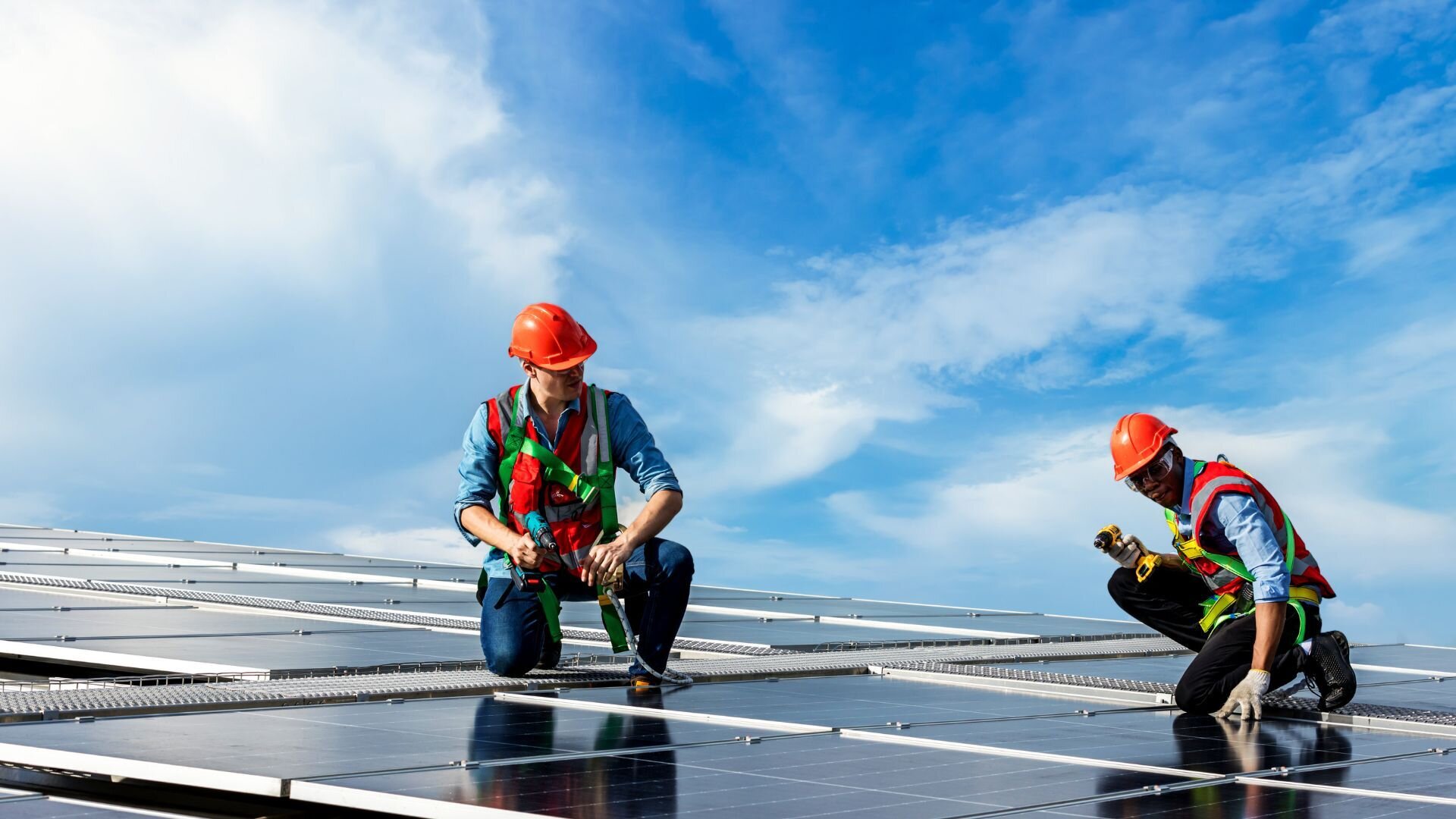
When you’re assembling solar modules at scale, mechanical fasteners create real bottlenecks - added weight, stress concentrations, corrosion risk, and longer cycle times on the line. For R&D engineers, product developers, and production teams working in photovoltaic and renewable energy manufacturing, the question is no longer whether adhesive bonding belongs in your process. It’s which bonding approach will hold up across 25-plus years of outdoor exposure while keeping your line moving efficiently.
Why Adhesive Bonding Is Gaining Ground in PV Manufacturing
Traditional mechanical fastening methods were built for a different era of solar technology. Today’s modules are thinner, lighter, and built from increasingly diverse material combinations - glass, backsheets, frames, junction boxes, and mounting brackets that expand and contract at different rates under thermal cycling. Rigid mechanical connections don’t accommodate that movement without introducing stress.
Adhesive bonding distributes load across the full bond area rather than concentrating it at fastener points, which reduces the risk of micro-cracking and delamination over a module’s service life. For design and engineering teams, this also opens up new possibilities: bonding enables cleaner aesthetics, slimmer profiles, and greater freedom in module geometry that screw-based assembly simply can’t match. As solar manufacturers push toward higher power density and lower balance-of-system costs, the ability to bond dissimilar substrates reliably has become a core engineering requirement rather than a niche option.
Lohmann’s DuploCOLL Portfolio for PV & Renewables:
Built for Outdoor Performance
Lohmann’s bonding, sealing, and protection solutions for the PV and renewables sector are engineered specifically for the conditions solar modules face in the field. That means formulations capable of withstanding sustained UV exposure, wide temperature fluctuations, and long-term humidity - not just in lab qualification, but across the operational lifetime of an installed system.
The portfolio is designed to integrate smoothly into existing manufacturing and assembly processes, so production managers don’t face disruptive line reconfigurations to adopt adhesive bonding. Solutions span bonding and structural attachment, edge sealing, and surface protection, giving procurement and engineering teams a consolidated source for multiple assembly requirements. For manufacturers working with next-generation module architecture or novel material combinations, Lohmann also supports co-development - working alongside your R&D and product development teams from concept through to industrialization and market launch.


Choosing the Right Bonding Approach for Your Assembly Process
Not every solar module assembly challenge needs the same solution. If your primary concern is replacing a mechanical fastener in a structural application, you need a bonding tape or adhesive with enough shear strength and creep resistance to handle long-term static load - particularly in roof-mount and ground-mount applications where wind uplift is a design factor. If you’re sealing module edges or protecting sensitive components from moisture ingress, the performance criteria shift toward adhesion to low-surface-energy substrates and resistance to hydrolytic degradation.
Procurement and converter teams sourcing at volume should also factor in process compatibility: cure time, application temperature range, and whether the adhesive suits automated dispensing or tape application. Lohmann’s technical experts - including application specialist Thomas Fogel - work directly with manufacturers to match portfolio solutions to your specific substrate, environment, and production constraints, shortening qualification timelines and reducing development risk.
Conclusion
Adhesive bonding in solar module assembly isn’t a workaround for mechanical fastening - it’s a well-established engineering approach that improves reliability, reduces weight, and supports the design flexibility that modern PV manufacturing demands. Lohmann brings 175 years of bonding expertise to the renewable energy sector, with a portfolio and application support model built around your development and production timeline.
To discuss your specific assembly challenge and find out which solution fits your process, reach out to the Lohmann team.


-3.jpg?width=767&name=2026%20175%20Jahre%20Website%20(2)-3.jpg)