

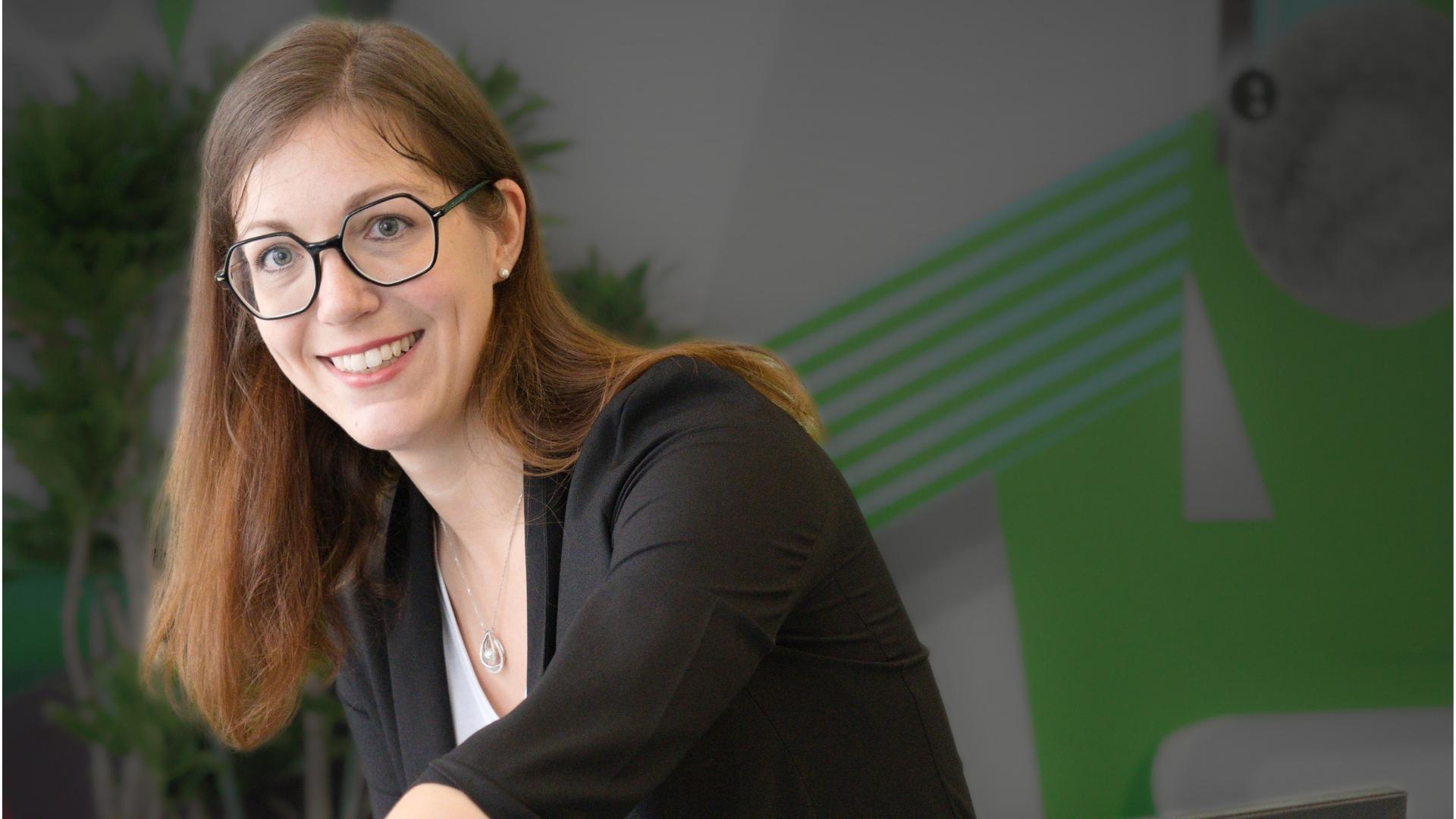
Karina Schloms finds her work most exciting where complex data, digital systems, and human expertise intersect. For her, this means uncovering patterns, understanding relationships, and turning a wealth of information into reliable knowledge.
At Lohmann, she works in Research & Development, where she leads the Data Science team. Together with her team, she develops data-driven models for product development. In this interview, she talks about her journey from chemistry to data science, the STEM experiences that shaped her, and the importance of working models that make it possible to combine a career with family life.
What are you currently working on – and what makes this topic particularly interesting to you?
My team is currently exploring how we can apply digital tools and artificial intelligence in practical ways throughout the development process. This includes further strengthening our development database, traditional machine learning, and design of experiments, as well as practical laboratory work, research, and documentation. How do we want to shape product development in the years ahead? Our goal is to create solutions that not only work from a technical perspective but also empower our employees to make the best possible use of their expertise.
What fascinates you most about science and data science?
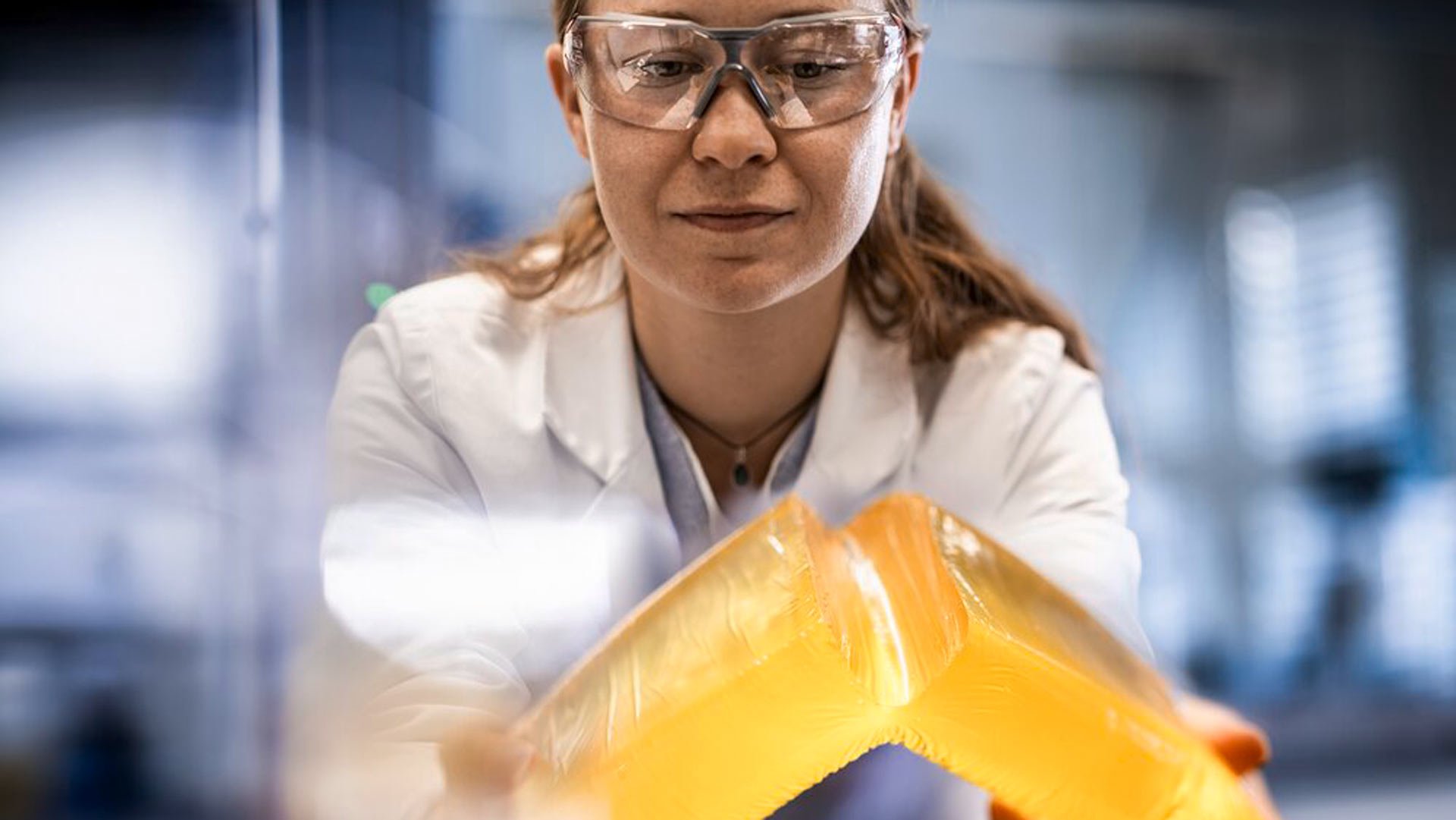
I developed a passion for science at an early age. I am fascinated by the opportunity to bring order to complex relationships and identify patterns. Understanding systems and finding structure in something that initially seems difficult to navigate have interested me for a very long time..jpg?width=1920&height=1080&name=20260902%20Karina%20Schloms%20Website%20Women%20in%20STEM%20(3).jpg)
Today, I am particularly drawn to the intersection of chemistry, mathematics, and digital transformation. Data and artificial intelligence allow us to further develop processes and make better use of existing knowledge.
What motivates me is the opportunity to use data-driven development to work not only more efficiently, but also more intelligently. For me, data science is therefore not an end in itself. It is a tool that enables new insights and solutions.
How did your journey eventually lead from chemistry to data science at Lohmann?
Science shaped me from an early age – not least because of my mother, who worked as a chemical laboratory technician. After graduating from high school, I decided to study chemistry in Mainz. However, I soon realized that I was less fascinated by laboratory work than by the analytical side of chemistry: data, analysis, and mathematical relationships.During my master’s program, the Peter Barth Scholarship brought me to Lohmann, where I worked closely with Research & Development. After graduating, I joined the department directly and became increasingly involved in product intelligence, machine learning, and data science. I have led the Data Science team since 2025 and now actively shape the continued development of this field.
Who or what had a particularly strong influence on you along the way?
Even while I was still in school, I actively participated in STEM programs – from Girls’ Day to mentoring programs for girls interested in science. One of the most valuable aspects was meeting other ambitious women with similar interests and goals at an early stage. It showed me that women do not have to be the exception in scientific careers.
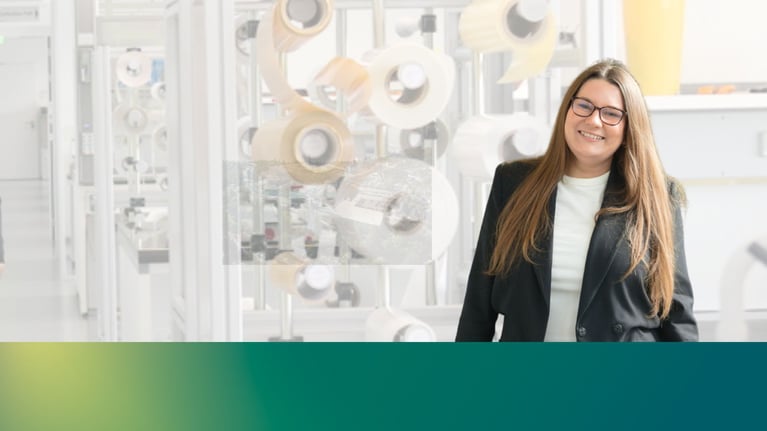
.jpg?width=1920&height=1080&name=20260902%20Karina%20Schloms%20Website%20Women%20in%20STEM%20(2).jpg)
At Lohmann, I was particularly influenced by a manager who placed his trust in me early on and gave me the freedom to shape my own role. Building on my background in physical chemistry and my initial programming experience, I was able to grow into an innovative field and take on responsibility early in my career.
What barriers do women in STEM careers still face today – and what needs to change?
During my education and university studies, I was surrounded by many women. In chemistry in particular, a balanced gender ratio is not uncommon. Nevertheless, I have observed that certain challenges often become apparent only later – especially when career development and starting a family become important at the same time.
Many women face the question of how to balance their careers and family lives in the long term. This is not limited to STEM careers, but it can be particularly noticeable in demanding technical and scientific roles. I am a mother myself and also had to redefine how I balance professional and personal responsibilities.
Flexible working models, an open corporate culture, and an understanding of different stages of life are therefore essential. At Lohmann, I have experienced how this balance can be supported through flexible working hours and models such as part-time leadership roles.
My hope for young women is that they will not allow potential obstacles later in life to discourage them. Their own passion and abilities should be at the heart of their career decisions. At the same time, companies and society as a whole must create structures that accommodate different ways of life and support women in pursuing their careers over the long term.
Lohmann
Women in STEM
What inspires women to pursue careers in science and technology? How did they find their path — and what have they experienced along the way? In our interview series, we introduce colleagues who conduct research, develop technologies, and take on responsibility at Lohmann. Their stories show the many different paths a STEM career can take — and where barriers still remain.
STEM stands for science, technology, engineering, and mathematics.
-3.jpg?width=767&name=2026%20175%20Jahre%20Website%20(2)-3.jpg)