

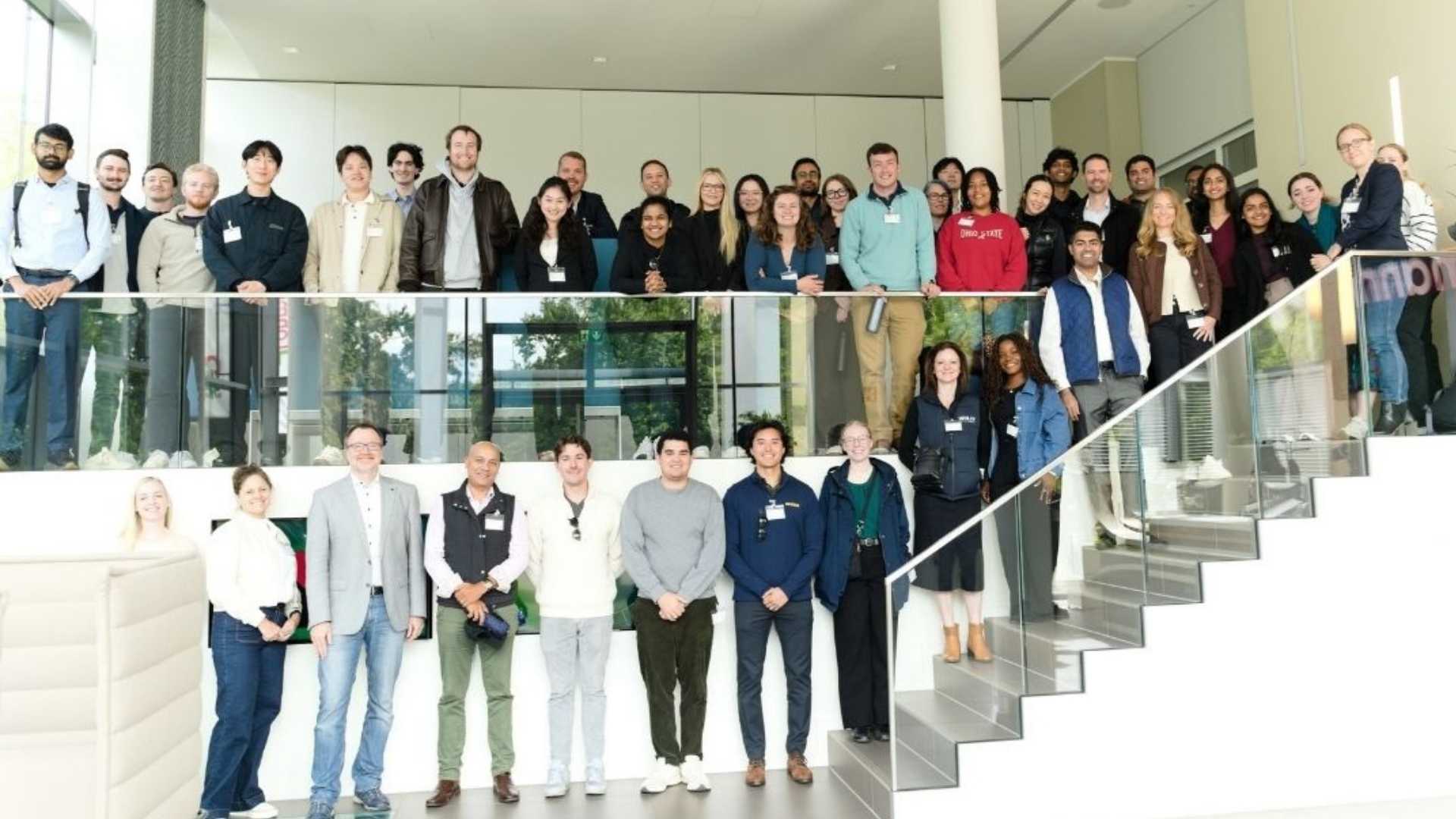
On May 19, 2026, Lohmann welcomed around 40 international students from WHU – Otto Beisheim School of Management to its Neuwied site. The purpose of the visit was to provide the students with insights into the culture, values, and challenges of an internationally operating family business and to demonstrate how a long-established company like Lohmann continues to succeed in global competition.
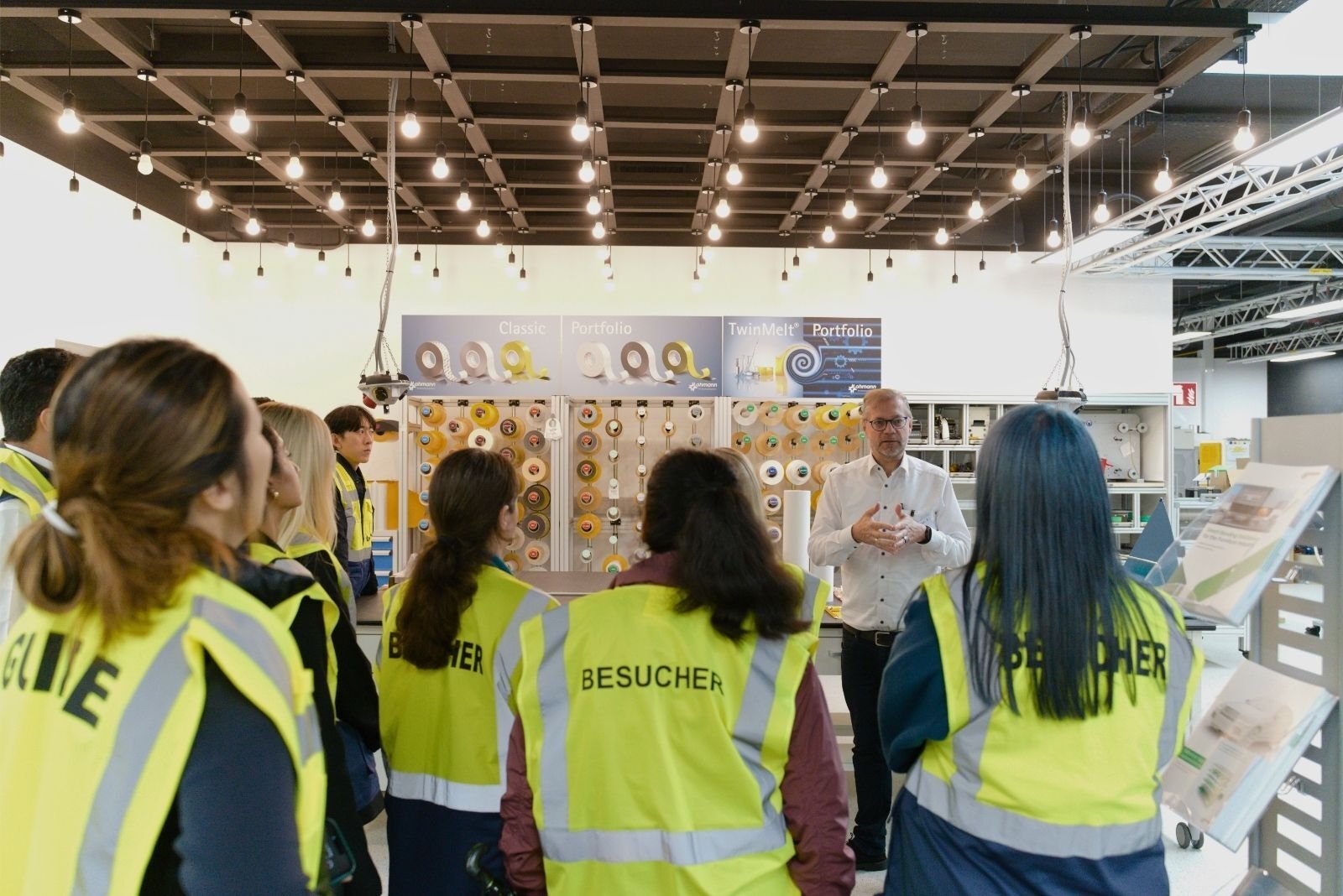
Participants from various countries around the world were first welcomed at the TEC Center. Following a company presentation, the program included guided factory tours, giving the students the opportunity to experience Lohmann firsthand. During the subsequent Q&A session and informal networking over finger food, the group engaged in in-depth discussions about current economic developments, differences between family businesses and large corporations, as well as topics such as innovation, corporate culture, and global challenges.
Family Businesses as a Model for Resilience
The visit was initiated by Prof. Dr. Nadine Kammerlander, Professor of Family Business at WHU. For her, it was important to introduce Lohmann as an outstanding example of a successful German family business with a long tradition.
“We are currently witnessing a tremendous transformation of the global economy. Digitalization and AI, sustainability, and geopolitical changes are impacting companies simultaneously,” explains Prof. Kammerlander. She adds: “Family businesses often demonstrate a remarkable level of resilience. They tend to take a more long-term approach, are frequently more values-driven, and place strong emphasis on caring for their employees. Lohmann is an impressive example of this: for 175 years, the company has continuously reinvented itself and embraced change as an opportunity.”
Exchange with the Next Generation of Leaders
Dr. Carsten Herzhoff, COO/CTO at Lohmann, also emphasized the importance of engaging with the next generation of international leaders: “We have maintained an excellent relationship with WHU for many years and are pleased to contribute to intergenerational dialogue as a traditional yet innovative family business. German SMEs, in particular, combine strong values with economic success in a unique way. Events like this create valuable opportunities for exchange with the next generation of leaders.”
-3.jpg?width=767&name=2026%20175%20Jahre%20Website%20(2)-3.jpg)